
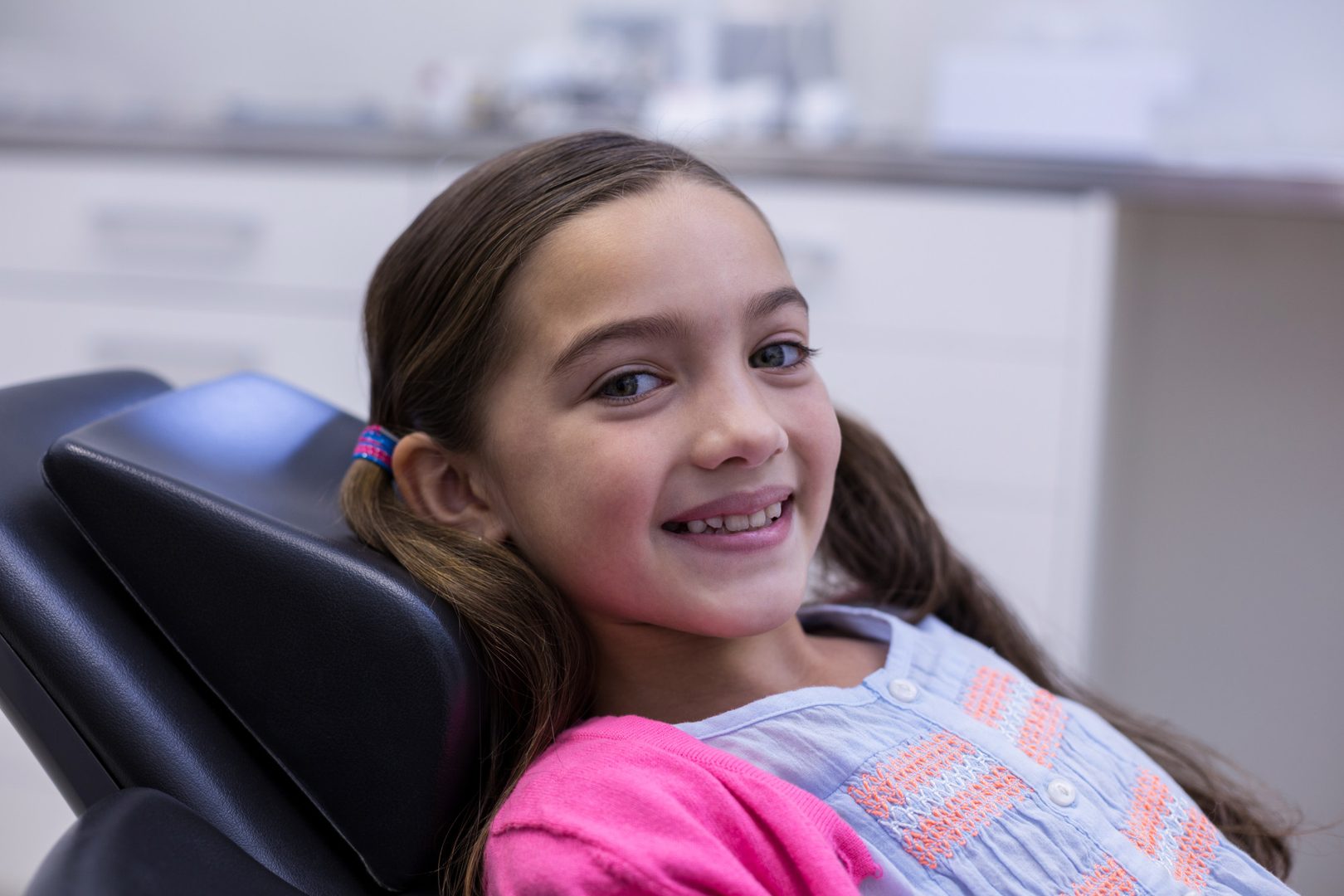
The Short Answer: Around Age Seven
The American Association of Orthodontists recommends that every child have an orthodontic evaluation by age seven. That number surprises most parents, because at seven a child still has a mouth full of baby teeth and nothing looks like it needs braces yet.
That is exactly the point. The age-seven visit is not about starting treatment. In most cases it ends with us saying come back in a year. What it does is give an orthodontist a look at how the jaw is growing and the permanent teeth are arriving, while there is still growth left to work with. Some of the most useful things orthodontics can do for a child are only possible during a specific developmental window, and that window closes quietly.
If you are in Spokane, Liberty Lake, or the surrounding communities and you have been wondering whether it is too early to have your child looked at, it almost certainly is not.
What an Orthodontist Sees at Seven That a Parent Cannot
By age seven most children have their first permanent molars and incisors. Those teeth establish the back-to-front and side-to-side bite relationship, and that relationship tells an experienced eye a great deal about what is coming.
Specifically, a first evaluation looks for:
- Crossbites. When upper teeth sit inside the lower teeth, the jaw often shifts to one side to close comfortably. Caught early, this is usually straightforward to correct. Left alone through years of growth, it can influence facial development.
- Severe crowding. If there is clearly not enough room for the permanent teeth arriving, early intervention can create space and, in some cases, reduce the likelihood of extractions later.
- Significant overbite or underbite. Jaw discrepancies respond to guidance while the jaws are still growing. After growth is complete, the same problem is a much bigger project.
- Protruding front teeth. Beyond appearance, upper front teeth that stick out well past the lower ones are more vulnerable to being chipped or knocked out during sports and playground falls.
- Habits that shape the bite. Prolonged thumb-sucking, tongue thrusting, or persistent mouth breathing can move teeth and affect how the palate develops.
- Teeth that are missing, extra, or arriving out of order. Eruption problems are far easier to manage when they are spotted early.
None of these are visible to a parent looking at their kid's smile across the dinner table, and several are not obvious at a routine dental cleaning either.
Early Evaluation Does Not Mean Early Braces
This is the misconception worth clearing up, because it is the reason many families delay the visit.
The large majority of children evaluated at seven do not begin treatment then. They go into periodic observation, which means we check in every six to twelve months and watch how growth and eruption are progressing. There is no cost to being watched, and there is real value in it: when the ideal moment for treatment arrives, we already know your child's history and we are not guessing.
A smaller group benefits from early intervention, and for them the timing genuinely matters. That is what two-phase treatment is for.
How Two-Phase Treatment Works
Two-phase treatment splits orthodontic care into two distinct periods with a resting stage in between. It is not a way to stretch treatment out. It is a way to do the right work at the right developmental moment.
Phase One: Early Intervention
Phase one typically begins between ages six and ten, while a child has a mix of baby and permanent teeth. The goals are structural rather than cosmetic:
- Guiding jaw growth and correcting bite relationships such as overbites, underbites, and crossbites
- Creating space so permanent teeth have somewhere to come in
- Correcting habits like thumb-sucking or tongue thrusting
- Preventing more severe problems from developing later
Appliances used in this phase might include a palatal expander, partial braces, or aligners, depending on what the case needs. Phase one is usually shorter than a full course of braces.
The Resting Phase
After phase one, active treatment stops and the remaining permanent teeth erupt naturally. We monitor progress with periodic checkups. Parents sometimes find this stage confusing because nothing appears to be happening, but the groundwork laid in phase one is what makes the next stage simpler.
Phase Two: Comprehensive Treatment
Phase two usually starts in the early teen years, once most or all permanent teeth are in. This is where alignment gets finished with full braces or aligners. Because the skeletal and space issues were addressed earlier, phase two is often more straightforward than it would have been otherwise.
You can read more about how we approach this on our two-phase treatment page.
Signs Worth Getting Checked Sooner
Age seven is a guideline, not a rule. A few things are worth an earlier look, and parents are usually the ones who notice them first:
- Losing baby teeth very early or very late compared to siblings and classmates
- Difficulty chewing or biting, or a child who consistently avoids certain foods
- Mouth breathing or persistent snoring
- A jaw that shifts noticeably to one side when closing, or that makes sounds
- Thumb-sucking that continues past about age five
- Front teeth that do not meet at all when the back teeth are together
- Speech difficulties that a speech therapist links to tooth or jaw position
- Crowding that is already visible in the front teeth
None of these guarantee that treatment is needed. They are simply reasons not to wait for a birthday before asking.
What Parents Can Do in the Meantime
Whether your child is in treatment, being monitored, or years away from either, a few habits make orthodontic outcomes better and cost nothing.
Keep up with regular dental cleanings and checkups. Decay and gum problems have to be resolved before orthodontic treatment can begin, and a child who arrives with healthy teeth simply has more options available.
Take mouthguards seriously for sports. Protruding front teeth are the most commonly injured teeth in childhood, and a mouthguard is inexpensive insurance against an injury that can complicate orthodontic planning for years.
Address habits gently rather than urgently. Thumb-sucking and tongue thrusting usually resolve on their own; when they do not, there are appliances that help, and pressure at home rarely works as well as a plan made with an orthodontist.
What the First Visit Is Actually Like
Parents worry that a first orthodontic visit will frighten a seven-year-old. In practice it is one of the easiest appointments in dentistry, because nothing invasive happens.
The consultation is free. Dr. Josh Johnson examines your child's teeth, bite, and jaw, and takes a look at how the permanent teeth are coming in. If records are needed, we use an iTero digital scanner rather than the putty impression trays most adults remember. The scanner is a small handheld wand that builds a detailed 3D model of the teeth in a few minutes. There is nothing to gag on and nothing to sit still for very long.
Then you get a straight answer, which falls into one of three categories: nothing to address and no need to return for a while, worth watching with periodic checkups, or here is a specific issue and here is the window to address it. If treatment is recommended, you will hear what it involves, roughly how long it takes, and why now rather than later.
Bring your questions. The visit is as much for you as it is for your child.
Serving Families Across the Spokane Area
We see patients at two offices, which makes the every-few-months rhythm of pediatric orthodontics easier to sustain. Our Spokane office is at 510 E Hastings Rd, Suite B, on the north side, convenient for families in North Spokane, Colbert, Indian Trail, and Deer Park. Our Liberty Lake office is at 21950 E Country Vista Dr, Suite 100A, which is the shorter drive from the Valley, Greenacres, Otis Orchards, and Post Falls.
Dr. Johnson has been practicing orthodontics since 2006. He earned his Doctor of Dental Surgery degree from the University of Washington in 2002 and his Master of Science in Orthodontics from the University of Michigan in 2005. He is a member of the American Association of Orthodontists, the Pacific Coast Society of Orthodontists, and the Washington State Society of Orthodontists.
For families who are already in treatment, we use DentalMonitoring to track progress remotely between visits, which reduces the number of times you have to pull a child out of school for a routine check.
Frequently Asked Questions About Kids and Orthodontics
My child still has baby teeth. Is an orthodontic visit really useful?
Yes. The evaluation is about jaw growth and eruption patterns, not about the baby teeth themselves. The first permanent molars and incisors give an orthodontist enough information to identify developing problems years before they become obvious.
Does my child need a referral from our dentist?
No referral is needed. Many families are referred by their general dentist, and many simply schedule the consultation themselves. We are glad to coordinate with your dentist either way.
Will my child need braces twice if we start early?
Two-phase treatment does involve two active periods, but the phases have different jobs. Phase one addresses structural and space issues while growth can still be guided; phase two aligns the permanent teeth. For children who genuinely need it, this approach is typically more efficient than waiting and treating everything at once.
What if we wait until all the permanent teeth are in?
For many children, waiting is completely appropriate, and that is exactly what we will recommend. For a smaller group with jaw discrepancies or severe crowding, waiting means the easiest window has closed and treatment becomes longer or more involved. The evaluation is what tells you which group your child is in.
How much does a first consultation cost?
The initial consultation is free, including at the observation stage. If your child is being monitored rather than treated, those periodic growth checks are part of that.
Can kids get clear aligners instead of braces?
In some cases, yes. Clear aligners are available for younger patients when the case suits them, and we have pages covering braces for kids in Spokane and clear aligners for kids in Spokane. Which one fits depends on the specific movements needed and how consistently a child will wear a removable appliance.
Schedule Your Child's Free Evaluation
If your child is around seven, or older and never evaluated, the visit costs nothing and takes very little time. Worst case, you find out everything is on track. Best case, you catch something while it is still simple to address. Call or text (509) 277-9773 or request a free consultation at whichever office is closer to you.